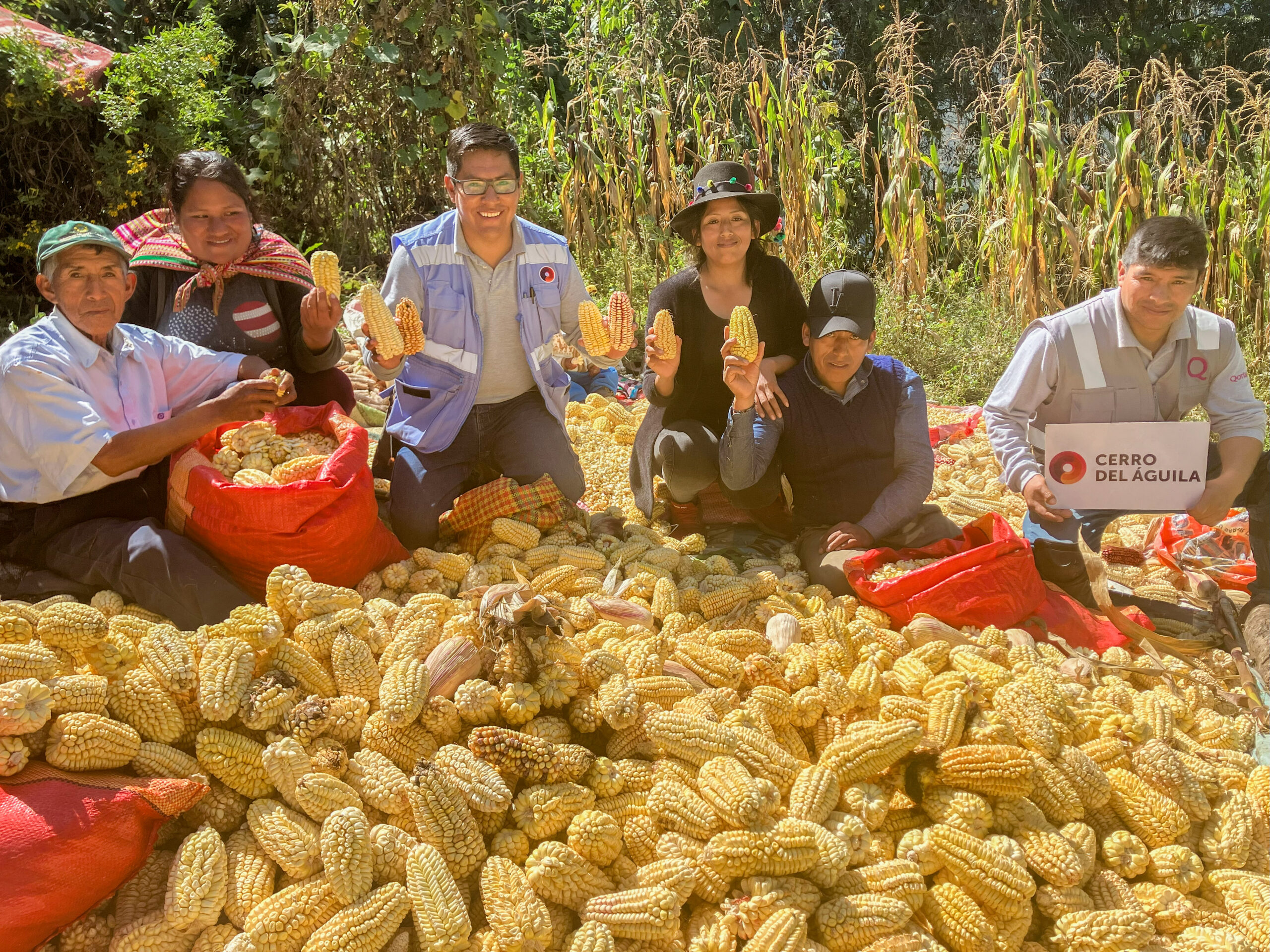
The agricultural project “Sumaq Sara,” known as the “sacred grain,” emerged within the annual farming program developed by Kallpa Generación in the communities neighbouring its Cerro del Águila Hydroelectric Power Plant. The initiative has a clear purpose: to revive ancestral corn while strengthening the economic and cultural foundation of hundreds of farming families. The initiative began in 2024, when a technical team chose to work through active listening. A total of 574 producers enrolled, and together with them, community plans were designed around practical and collaborative learning.
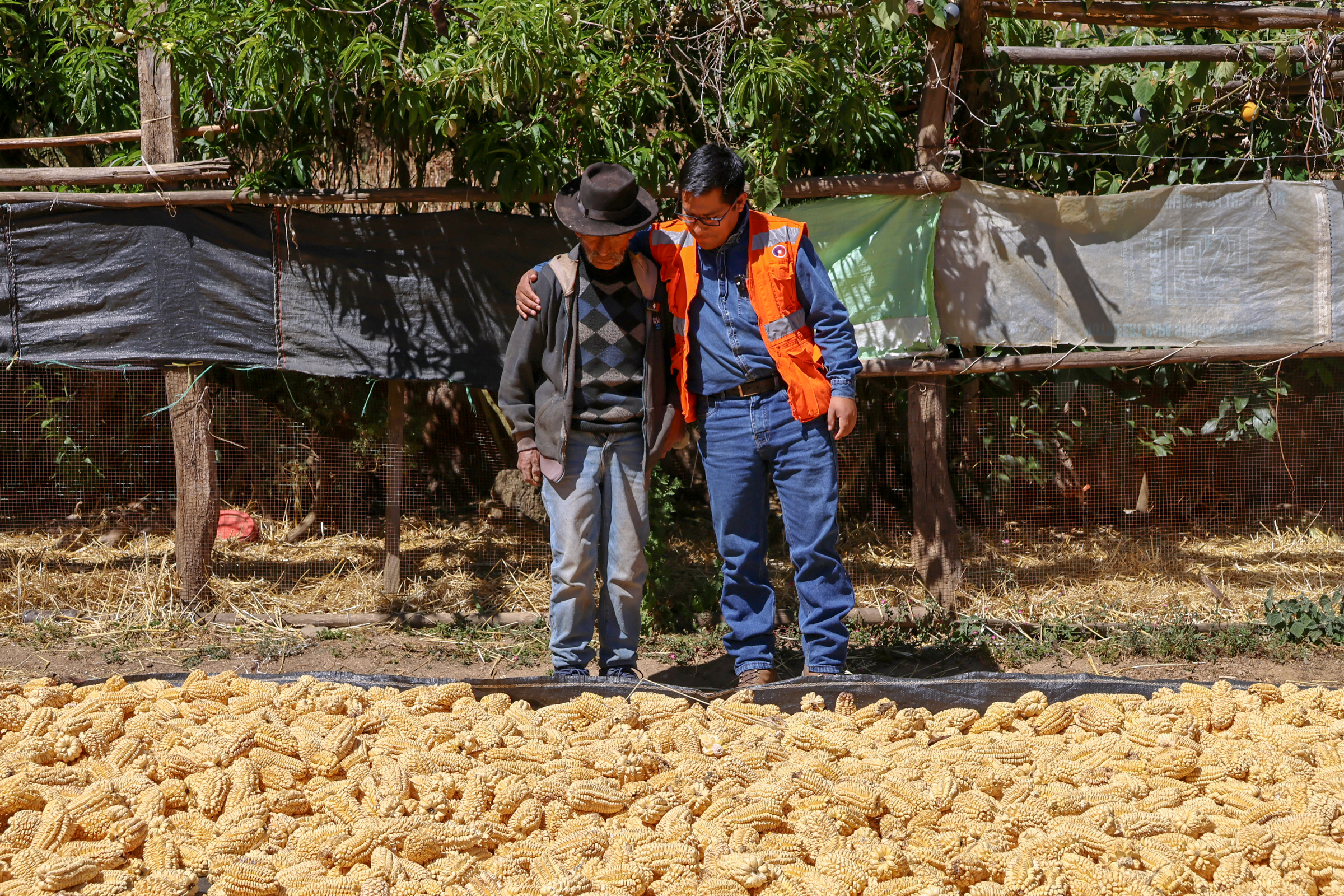
The key figures in this process were the yachachik, field sages who bridged inherited knowledge with modern technical tools. Through this dialogue, practices such as the use of the chakitaqlla, offerings (challas) to Pachamama, ayni (reciprocal labor), and planting according to the lunar calendar were revived. These traditions were complemented by ongoing technical assistance and a monitoring system that supported each stage of cultivation.
Transformative Results
The impact became visible quickly. By 2025, corn yields had increased by 26%, reaching 1,021 kilograms per hectare. More than 240 hectares were cultivated under this approach, and all participating families incorporated ancestral practices into their production.
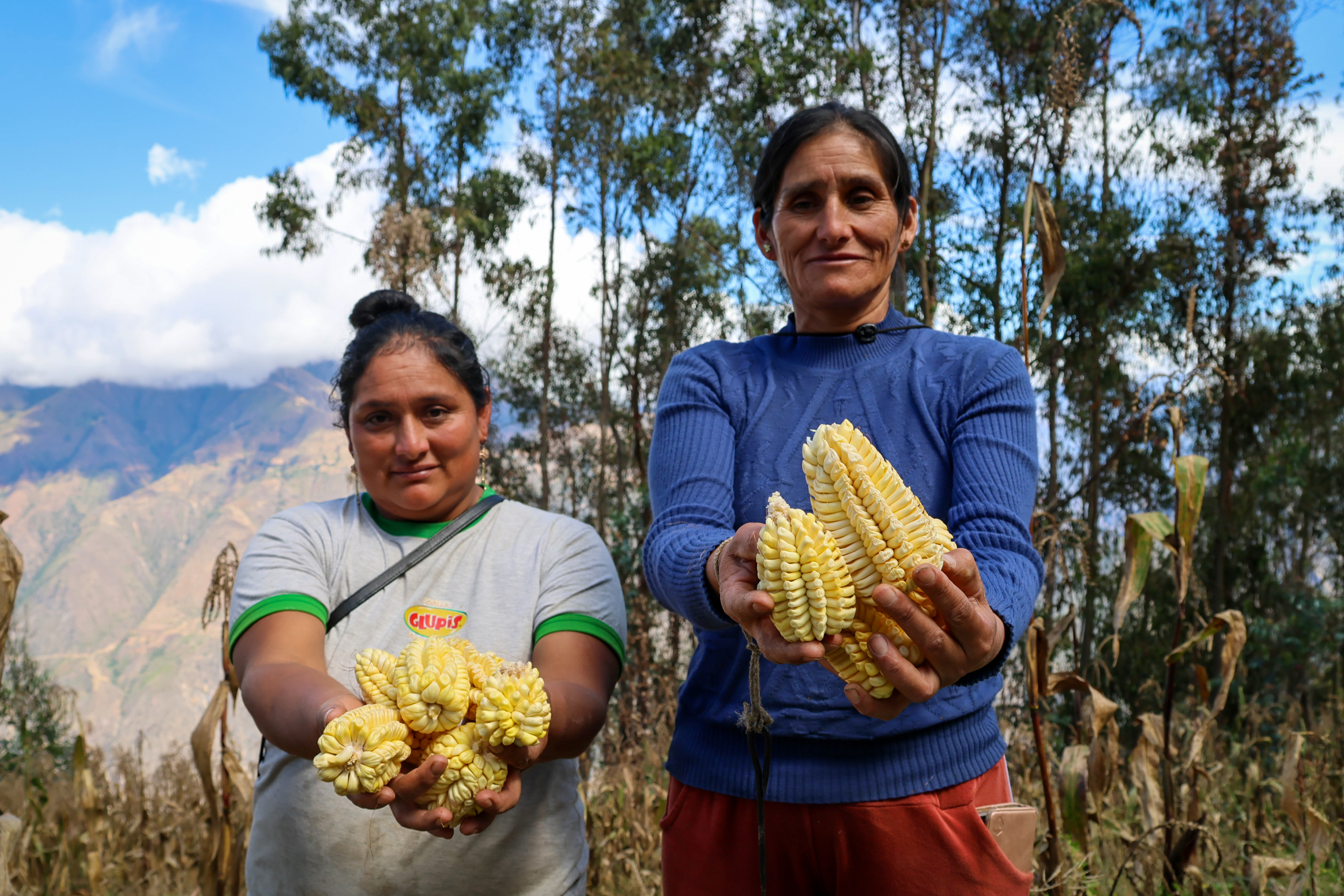
Women’s participation also stood out: 43% of project members were women, strengthening their presence and leadership in agricultural activities.
During the 2024–2025 agricultural campaign, total production reached 585,844 kilograms of corn. Of that volume, 51.9% was sold, strengthening the local economy and energizing the provincial market. At the household level, the impact was tangible. Part of the harvest supported self-consumption, while the portion sold increased incomes by 30%, generating a positive effect for more than 2,200 people indirectly connected to the project.
The strengthening was not only productive but also educational. Eighty-eight percent of beneficiaries are familiar with at least nine key agricultural techniques — from land preparation, planting, fertilization, and soil enrichment, to identifying pests and diseases, proper pesticide use, preparing and applying organic fertilizers, and managing harvest and post-harvest processes. Of these, 83% report effectively applying this knowledge on their plots, consolidating a more technical and sustainable form of agriculture.
Recognition for Joint Effort
On December 11, 2025, the National Society of Mining, Petroleum and Energy (SNMPE) awarded the project the Sustainable Development Prize in the Social Management category for the electricity sector. The recognition highlighted the coordinated work with communities and the balanced integration of ancestral knowledge and technical support to promote sustainable agriculture in the province.
From Kallpa Generación, operator of the Cerro del Águila Hydroelectric Power Plant, Social Management Manager Luis Alburqueque emphasized the initiative’s territorial approach:
“Our priority is to integrate into the local economic dynamic and contribute to better living conditions for families by strengthening what they know best: agriculture. We seek to ensure that their capacities continue to grow so that their work remains sustainable and competitive over time.”
Today, in the fields of Tayacaja, corn cobs once again rise proudly. Beyond improved productivity, Sumaq Sara confirms that when communities, companies, and ancestral knowledge work together, the land responds and flourishes once more.